 Simulation
Fit check
Is Ink Reverie worth it for you?
We tell you who should skip it, too.
Play it if you…
Good fit- Casual players who want a village-building game with light combination mechanics
- Players interested in Tang- and Song-inspired settings who prefer management over combat
- Strategy fans who enjoy regional trade, production, and seasonal resource planning
Skip it if you…
Saves you a refund- Players seeking combat, character progression, or action-focused gameplay
- Players who want a single deep economic simulation rather than several regional systems
- Players looking for a puzzle game centered only on match-3 play
Our take on Ink Reverie
The presentation gives equal weight to historical atmosphere and management, but the core loop centers on arranging and merging buildings. The five regions add different systems, yet the listing does not establish how much depth each chapter provides beyond its headline mechanic.
What is Ink Reverie?
Ink Reverie is a relaxed town-building game set in an imaginary period shaped by Tang- and Song-era artistic traditions.
Players expand an isolated settlement through scouting, building, manufacturing, and commerce. Structures can be moved by dragging, and nearby buildings of lesser tiers can be merged into more advanced ones to reveal additional content. The game features five areas: Jiangnan Mountain Village, Dunhuang and the Western Regions, the Citong Sea Area, the Four Seasons of Jincheng, and old Chang’an. Each area has distinct systems, including caravan networks, trading fleets, seasonal crop management and stockpiling, and market organization. In Chang’an, structures represent scholars, farmers, craftspeople, or traders; arranging them within market districts creates varied advantages.
How Ink Reverie plays
- 01Five Regional Chapters
- The settings include Jiangnan, Dunhuang, Citong, Jincheng, and Chang'an, with distinct regional mechanics.
- 02Building Merging
- Adjacent lower-tier structures can be combined into higher-tier buildings after players arrange them on the map.
- 03Caravan Trade
- The Dunhuang chapter uses relay stations and camel caravans to establish routes toward cities in two directions.
- 04Maritime Commerce
- The Citong chapter centers on constructing merchant ships and assembling fleets for overseas trading.
- 05Seasonal Planning
- The Jincheng chapter requires crop scheduling and material storage that account for changing seasons.
- 06Market Combinations
- Chang'an divides buildings into four social categories and grants benefits for selected arrangements in market areas.
Games like Ink Reverie
Simulation Simulation
Rota's Nautical Chronicles of Trade
Emma CreateFor:Players who enjoy city-building simulations centered on trade and productionSkip if:Players seeking combat-focused gameplay rather than negotiation and town management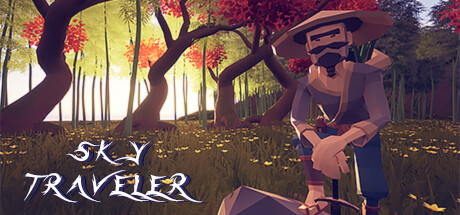 Simulation
Sky traveler
DFRGAMESFor:Players who enjoy village-building games with gathering and questsSkip if:Players seeking deep combat systems may find the dungeon battles secondary to settlement development Simulation
Factory Town Idle
Erik AsmussenFor:Idle-game players who want to manage production through menus rather than a direct town-building interfaceSkip if:Players seeking hands-on placement and construction as the main activity may find the menu-based management approach limitingPicked by overlapping fit notes and genres, not an editorial comparison.
Ink Reverie: platforms & release
Is Ink Reverie worth it?
It is worth it if: casual players who want a village-building game with light combination mechanics. Skip it if: players seeking combat, character progression, or action-focused gameplay.
Where can I download Ink Reverie?
Use the Download Now button on this page: it opens Ink Reverie's store page, where you can choose how to get it.
What platforms is Ink Reverie on?
Windows and macOS.