Fit check
Is SGS Pacific D-Day worth it for you?
We tell you who should skip it, too.
Play it if you…
Good fit- Historical strategy players interested in Pacific War island operations
- Wargamers who want to command either US or Japanese forces
- Players who enjoy balancing objectives against troop losses
Skip it if you…
Saves you a refund- Players seeking a campaign with different final historical outcomes, since US forces eventually clear each island
- Players who prefer loose objectives over time pressure and loss limits, particularly when commanding the USA
- Players looking for squad-scale operations rather than battalion- or company-scale battles
- Players seeking a broad empire-management game rather than a set of five island battles
Our take on SGS Pacific D-Day
The main sticking point is the US command challenge: objectives come with tight timelines and a need to limit losses. Players seeking a campaign that can change the overall outcome may also hit a wall, since the US eventually clears each island.
What is SGS Pacific D-Day?
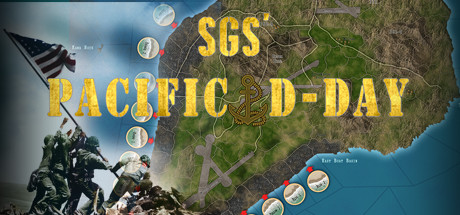
An operational strategy game covering five Pacific War battles: Tarawa, Saipan, Tinian, Peleliu, and Iwo Jima.
Players can command either the United States or Japan, using mobile infantry, tanks, aircraft, bunkers, trenches, tunnels, and mines. Each turn provides cards to support strategy, and scenarios also include events. Scenarios run for 20 to 40 turns, with turns representing six hours in Tarawa and one day in the other battles. Starting options can change troop numbers, replacements, air support, and initial positions. US forces must capture islands while limiting losses; Japanese forces defend until the scenario ends and aim to inflict heavy casualties. Battles use battalion-scale units in Tarawa, Saipan, and Tinian, and company-scale units in Peleliu and Iwo Jima.
How SGS Pacific D-Day plays
- 01Five Pacific Battles
- The scenarios cover Tarawa, Saipan, Tinian, Peleliu, and Iwo Jima between 1943 and 1945.
- 02Two Playable Sides
- US commanders aim to capture islands while limiting losses, while Japanese commanders try to hold until the scenario ends and inflict casualties.
- 03Scenario Setup Options
- Players can change troop numbers, replacements, air support, and starting positions.
- 04Different Unit Scales
- Battles use battalion-scale units in Tarawa, Saipan, and Tinian, and company-scale units in Peleliu and Iwo Jima.
- 05Turn-Based Cards
- Players receive cards each turn to assist their strategy.
SGS Pacific D-Day compared to similar games
Xenonauts centers on small squads of persistent soldiers defending Earth from alien invasion and recovering technology; SGS Pacific D-Day covers five historical Pacific War operations at battalion or company scale. Old World focuses on leading an empire across generations, with political marriages and heirs, rather than commanding forces in these island campaigns.
SGS Pacific D-Day: platforms & release
Is SGS Pacific D-Day worth it?
It is worth it if: historical strategy players interested in Pacific War island operations. Skip it if: players seeking a campaign with different final historical outcomes, since US forces eventually clear each island.
Where can I download SGS Pacific D-Day?
Use the Download Now button on this page: it opens SGS Pacific D-Day's store page, where you can choose how to get it.
What platforms is SGS Pacific D-Day on?
Windows and macOS.