Fit check
Is The Guild II Renaissance worth it for you?
We tell you who should skip it, too.
Play it if you…
Good fit- Strategy players interested in 14th-century European social and economic change
- Players who want to manage varied professions rather than focus only on warfare
- Simulation fans seeking multiple historical scenarios and larger maps
Skip it if you…
Saves you a refund- Players seeking a narrowly focused military strategy game may find its professions, commerce, and social systems less suitable
- Players wanting a single compact scenario may not prefer its three scenarios and larger world maps
- Players looking for a fantasy setting may not fit the game's 14th-century European context
Our take on The Guild II Renaissance
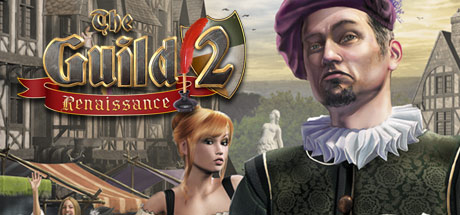
Rather than centering only on battles or territorial conquest, the game places social change, trade, professions, titles, and nobility within its 14th-century setting. Its structure follows the growing influence of ordinary people and the middle class as Europe moves toward the Renaissance.
What is The Guild II Renaissance?
Set in 14th-century Europe, this strategy simulation portrays the middle class gaining influence through commerce, trade, literacy, and the spread of printing.
It introduces eight occupations, including military service, grave digging, stonework, juggling, innkeeping, banking, milling, and fruit cultivation. The setting gains extra merchandise, structures, atmospheric touches, and visual effects. Larger maps feature three scenarios: Transylvania, the Rhineland, and the Alps. Other additions include improved computer-controlled opponents, a revised system for titles and nobility, the God Measures option, and selectable difficulty settings.
How The Guild II Renaissance plays
- 01Eight New Professions
- Available roles include mercenary, grave digger, stonemason, juggler, innkeeper, banker, miller, and fruit grower.
- 02Expanded Scenarios
- Transylvania, the Rhineland, and the Alps provide new scenarios across larger maps.
- 03Updated Social Systems
- Reworked artificial intelligence and changes to titles and nobility alter the management framework.
- 04Additional Game Options
- God Measures and difficulty settings add configuration choices.
- 05New World Content
- The expansion adds goods, buildings, environmental details, and visual effects.
The Guild II Renaissance compared to similar games
The Guild II Renaissance combines historical strategy with eight professions, social titles, nobility systems, and scenario maps set in 14th-century Europe. Old World focuses on leading an empire across generations, including political marriages, heirs, and legacy management. Xenonauts instead centers on a multinational military organisation, persistent soldiers, turn-based squads, and alien technology recovery.
The Guild II Renaissance: platforms & release
Is The Guild II Renaissance worth it?
It is worth it if: strategy players interested in 14th-century European social and economic change. Skip it if: players seeking a narrowly focused military strategy game may find its professions, commerce, and social systems less suitable.
Where can I download The Guild II Renaissance?
Use the Download Now button on this page: it opens The Guild II Renaissance's store page, where you can choose how to get it.
What platforms is The Guild II Renaissance on?
Windows only.