 RPG
Fit check
Is Dark Hunting Ground worth it for you?
We tell you who should skip it, too.
Play it if you…
Good fit- Action RPG players who want to spend sessions refining loot-based character builds
- Players who enjoy experimenting with skill combinations across multiple archetypes
- Players seeking escalating combat challenges with customizable hunting areas
Skip it if you…
Saves you a refund- Players seeking a lengthy, plot-heavy RPG may find the story intentionally sparse
- Players who prefer a fixed campaign may not enjoy endless depths, randomized loot, and repeated build refinement
- Players looking for stealth, exploration, or survival-crafting gameplay may prefer other genres
Our take on Dark Hunting Ground
Its defining structure is the shift from direct monster hunting to automated farming, with build systems and loot collection continuing as the player descends through escalating Void challenges.
What is Dark Hunting Ground?
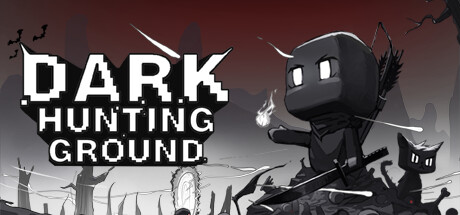
Dark Hunting Ground is a minimalist pixel-action RPG focused on combat, loot, and build creation.
Players hunt monsters, collect randomized drops, level up, and combine skills across six archetypes: Warrior, Assassin, Scholar, Ranger, Summoner, and Guardian. Eighteen core skills can be modified with seven Slates each, while relics, Slates, Abyssal Eyes, talents, flasks, and other progression systems add further build layers. Five bosses become stronger at higher difficulty levels, and endless Void depths provide escalating challenges. Players can design hunting grounds with 13 cores, fight waves in the Abyss, craft gear through a deterministic system, configure loot filters, and switch between manual combat and automated farming. Build presets, a training dummy, Cruel and Expert modes, and customizable controls support experimentation.
How Dark Hunting Ground plays
- 01Six Skill Archetypes
- Builds draw from Warrior, Assassin, Scholar, Ranger, Summoner, and Guardian specializations.
- 02Skill Socket Modifiers
- Each skill accepts seven Slates that can substantially alter its behavior and effects.
- 03Layered Progression
- Advancement opens talents, flasks, the Dark Tree, the Chaos Atlas, and Cognition.
- 04Build Resources
- Character setups can combine 80 relics, 60 Slates, and 35 Abyssal Eyes.
- 05Custom Hunting Grounds
- Thirteen cores provide building blocks for creating personalized hunting areas.
- 06Manual Or Automated Farming
- Loot collection can shift from direct combat to automated farming as systems are refined.
- 07Deterministic Crafting
- Randomized drops can be refined piece by piece through a fixed-outcome crafting process.
- 08Escalating Boss Hunts
- Five bosses gain strength as difficulty rises, with additional challenges available in deeper tiers.
- 09Build Presets
- Multiple character setups can be saved and changed without rebuilding the character.
Games like Dark Hunting Ground
RPG RPG
Nuclear Mages
Nuclear MagesFor:Solo players who want an action RPG centered on elemental magic and no weaponsSkip if:Players who want forgiving tower defense may hit a wall when one enemy strike on the crystal ends the run. RPG
Liminal Void
JeistarFor:Horror fans who want dungeon crawling with resource managementSkip if:Players seeking a low-pressure experience may find the hostile enemies and difficult Void God battles demanding RPG
Wally and the FANTASTIC PREDATORS
Oscar GonzalezFor:Rogue-lite players who want runs shaped by stacking upgrades and cursesSkip if:Players seeking a forgiving progression system, since death resets the current runPicked by overlapping fit notes and genres, not an editorial comparison.
Dark Hunting Ground: platforms & release
Is Dark Hunting Ground worth it?
It is worth it if: action RPG players who want to spend sessions refining loot-based character builds. Skip it if: players seeking a lengthy, plot-heavy RPG may find the story intentionally sparse.
Where can I download Dark Hunting Ground?
Use the Download Now button on this page: it opens Dark Hunting Ground's store page, where you can choose how to get it.
What platforms is Dark Hunting Ground on?
Windows and macOS.