
Fit check
Is Sword and Fairy worth it for you?
We tell you who should skip it, too.
Play it if you…
Good fit- Players of Chinese-language RPGs who want a story rooted in Chinese mythology
- Turn-based RPG fans who prefer parties of up to three controllable characters
- Players interested in relationship-driven fantasy journeys centered on destiny
Skip it if you…
Saves you a refund- Players seeking real-time combat rather than command-based, turn-by-turn encounters
- Players looking for a short standalone premise instead of a story-led journey with several named companions
- Players who cannot read Chinese-language games
Our take on Sword and Fairy
Its defining structure is a third-person, turn-based battle system where up to three characters can act through attacks, combined strikes, magic, items, healing, or retreat.
What is Sword and Fairy?
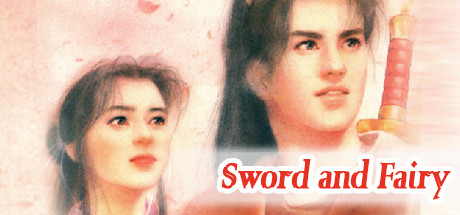
This single-player Chinese-language RPG follows Li Xiaoyao, an inn attendant who becomes involved in a conspiracy after meeting Zhao Ling'er, a descendant of the Nuwa people.
He escorts her toward Miaojiang in search of her mother, meeting Lin Yueru and Anu along the way. The story draws on ancient Chinese legends about immortals, demons, gods, humans, and ghosts, with destiny as its central theme. Battles use a third-person, turn-based system for up to three controlled characters. Available commands include attacks, combined strikes, magic, thrown items, recovery abilities, and retreat. The game is the first entry in the Sword and Fairy series.
How Sword and Fairy plays
- 01Three-Character Battles
- Combat allows simultaneous control of up to three party members.
- 02Turn-Based Combat
- Each encounter offers offensive actions, magic, items, recovery options, and the choice to flee.
- 03Destiny-Focused Story
- The journey centers on Li Xiaoyao escorting Zhao Ling'er while a conspiracy and her hidden identity unfold.
- 04Chinese Language
- The game is available only in Chinese.
Sword and Fairy compared to similar games
Sword and Fairy uses Chinese mythological themes and a destiny-centered journey, while Planescape: Torment: Enhanced Edition focuses on an unconventional story and exploration of a strange, dangerous city. Back to the Dawn is a prison-escape RPG built around survival, investigation, crime, corruption, and a time limit. Tales of Symphonia centers on a chosen figure, a dying world, and the fate of two connected worlds.
Sword and Fairy: platforms & release
Is Sword and Fairy worth it?
It is worth it if: players of Chinese-language RPGs who want a story rooted in Chinese mythology. Skip it if: players seeking real-time combat rather than command-based, turn-by-turn encounters.
Where can I download Sword and Fairy?
Use the Download Now button on this page: it opens Sword and Fairy's store page, where you can choose how to get it.
What platforms is Sword and Fairy on?
Windows only.