 Strategy
Fit check
Is Rocket Science worth it for you?
We tell you who should skip it, too.
Play it if you…
Good fit- Space simulation fans who want to assemble and fly custom spacecraft
- Players interested in orbital mechanics and automated mission planning
- Strategy players who prefer open-ended engineering experiments over scripted missions
Skip it if you…
Saves you a refund- Players seeking immediate arcade-style launches may find the orbital mechanics and realistic rocket behavior demanding
- Those wanting a short, tightly directed campaign may find the spacecraft construction and exploration structure slow-paced
- Players looking for ground-based strategy or combat will find the focus placed on spacecraft, launches, and celestial exploration
Our take on Rocket Science
The focus on physical parameters, orbital planning, and spacecraft assembly trades immediate accessibility for a more involved launch process. That choice gives construction and flight decisions greater weight, but it leaves less room for fast, simplified missions.
What is Rocket Science?
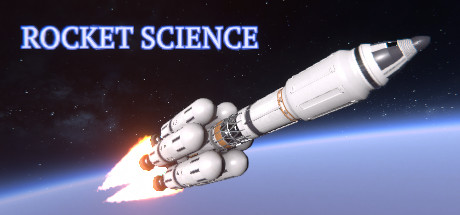
Rocket Science is a space-program simulation centered on building and launching spacecraft from an abandoned Soviet cosmodrome.
Players assemble rockets from more than 75 parts, including engines, fuel tanks, command modules, batteries, solar panels, docking ports, and structural components. Parts connect through slots and connectors, and some can be configured by changing physical parameters. Missions may be flown directly or planned for automated operation. The game models the Solar system and celestial bodies at scale, with the inner planets and their satellites available for exploration. It includes an atmospheric model with a transition into space, surfaces based on NASA elevation maps, orbital mechanics, and rocket physics. Time can be accelerated by up to 10 times during powered flight.
How Rocket Science plays
- 01Modular spacecraft building
- More than 75 components support rockets with different structures, propulsion systems, control equipment, and power hardware.
- 02Manual or automated flights
- Missions can be piloted directly or prepared as flight plans for automatic launches.
- 03Scaled Solar system
- The inner planets and their satellites are available to visit in a model that represents celestial bodies at scale.
- 04Configurable rocket hardware
- Selected parts allow changes to their physical parameters, while engines use specific fuel combinations.
- 05Accelerated simulation time
- Time may run at up to 10 times normal speed while engines are operating.
Games like Rocket Science
Strategy Strategy
EarthX
Mesote GamesFor:Players who enjoy managing a spaceflight company rather than piloting a single spacecraft.Skip if:Players looking for varied activities beyond the repeated cycle of building rockets and launching payloads. Strategy
Solar Expanse - Space Exploration Manager
Games OperatorsFor:Space strategy players who enjoy calculating rocket routes and schedules.Skip if:Players seeking rapid action may find the focus on scheduling, scanning, and resource planning slow. Strategy
Kaizen: A Factory Story
Klei PublishingFor:Puzzle players who enjoy constructing and refining automated production linesSkip if:Players seeking a tightly scripted campaign may find the open-ended structure less directedPicked by overlapping fit notes and genres, not an editorial comparison.
Rocket Science: platforms & release
Is Rocket Science worth it?
It is worth it if: space simulation fans who want to assemble and fly custom spacecraft. Skip it if: players seeking immediate arcade-style launches may find the orbital mechanics and realistic rocket behavior demanding.
Where can I download Rocket Science?
Use the Download Now button on this page: it opens Rocket Science's store page, where you can choose how to get it.
What platforms is Rocket Science on?
Windows only.


