
Fit check
Is Ymir worth it for you?
We tell you who should skip it, too.
Play it if you…
Good fit- Strategy players who want a city builder with population and market simulation
- Multiplayer groups interested in diplomacy, trade and real-time city battles
- Players who enjoy starting in the Stone Age and researching hundreds of technologies
Skip it if you…
Saves you a refund- Players who want direct control over individual citizens or economic actions may hit a wall when population behavior is governed by the simulation.
- Players seeking short, immediately resolved matches may struggle with battles that continue over time and persistent games lasting several weeks.
- Solo players seeking the main intended experience may find the multiplayer focus limiting.
Our take on Ymir
The bounce point arrives when population and markets stop behaving like manually controlled management systems. Citizens choose work and purchases themselves, while oversupplying a resource can damage the economy, making experimentation produce unstable results.
What is Ymir?
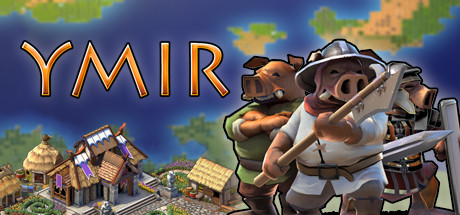
Ymir combines 4X strategy with city building across a world map and regional isometric zones.
Players explore procedurally generated regions, settle them, develop cities and manage populations whose work, purchases, aging and reproduction follow the simulation rather than direct orders. Resources, prices and production interact through supply, demand and social classes. Technology progresses from the Stone Age to the post-Iron Age, while diplomacy includes treaties, taxes, payments, trade agreements and trade routes. Cities can be fortified with terrain changes, walls, bridges, gates and towers. Battles take place in cities in real time, with AI-controlled troops and reinforcements. Multiplayer supports local or persistent servers, with games lasting several weeks in persistent mode.
How Ymir plays
- 01Procedural Regions
- Each world tile contains a randomly generated isometric region with climate-dependent resources, terrain and vegetation.
- 02Simulated Population
- Population members age, work, reproduce and purchase goods according to the economic simulation.
- 03Social Classes
- Different population classes have their own incomes, purchasing power and revenues.
- 04Economic Interactions
- Resource prices respond to supply, demand, rarity and production costs, including materials consumed by players.
- 05Diplomatic Trading
- Players can arrange passage rights, taxes, payments, trade agreements and routes between civilizations.
- 06City Fortifications
- Defenses can include walls, bridges, gates, stairs, towers and battlements, with terrain modification for strategic positions.
- 07AI Battle Forces
- Troops fight under AI control, allowing battles to continue without the player's presence and receive reinforcements.
- 08Two Multiplayer Modes
- Real-time games support solo play or a few friends, while persistent servers remain active 24/7 for games lasting several weeks.
Ymir compared to similar games
Old World centers on leading a historical empire across generations, including political marriages, heirs and long-term legacy. Ymir instead combines 4X play with a city-level socio-economic simulation, procedurally generated regions, player trade routes and real-time battles. Xenonauts focuses on turn-based squad operations against aliens, rather than civilization development and simulated city economies.
Ymir: platforms & release
Is Ymir worth it?
It is worth it if: strategy players who want a city builder with population and market simulation. Skip it if: players who want direct control over individual citizens or economic actions may hit a wall when population behavior is governed by the simulation.
Where can I download Ymir?
Use the Download Now button on this page: it opens Ymir's store page, where you can choose how to get it.
What platforms is Ymir on?
Windows only.