
Fit check
Is Pompeii: The Legacy worth it for you?
We tell you who should skip it, too.
Play it if you…
Good fit- Players who want historical strategy spanning multiple generations
- City builders who prefer politics and trade alongside construction
- Strategy players who want disasters and optional legion battles
Skip it if you…
Saves you a refund- Players seeking a narrowly focused city builder without family politics, trade, or research
- Players who prefer short, self-contained campaigns rather than decisions that carry across generations
- Players looking for a primarily combat-focused strategy game
Our take on Pompeii: The Legacy
The broad management structure trades narrow focus for variety: city construction, family politics, commerce, research, disasters, and optional battles all compete for attention. Players seeking a single dominant system may find the experience less specialized.
What is Pompeii: The Legacy?
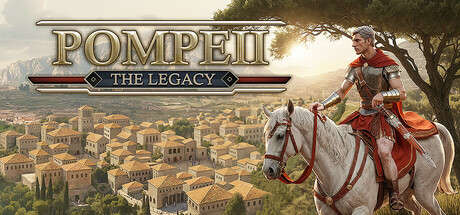
Pompeii: The Legacy follows a Roman family rebuilding the city two decades after the eruption of Vesuvius.
Across generations, players shape laws, negotiate trade rights, arrange marriages or contracts, and cultivate relationships with emperors and rivals. City management includes housing, temples, arenas, markets, and aqueducts, while trade routes and changing markets affect the economy. Patricians, plebeians, and slaves have distinct ambitions and conflicts. Earthquakes, fires, famine, plagues, and political sabotage create threats beyond military encounters. Family Bonuses, Research and Development, and Imperial Privileges provide active and passive benefits, with Technology and Philosophy as the two research branches. Real-time legion battles are optional.
How Pompeii: The Legacy plays
- 01Generational leadership
- Decisions made across decades can affect the family's influence and the city's future for generations.
- 02Roman politics
- Laws, trade rights, alliances, imperial favor, and rivalries shape the family's position.
- 03City construction
- Housing, temples, arenas, markets, and aqueducts address the needs of Pompeii's population.
- 04Empire-wide trade
- Trade routes and shifting markets connect the city's economy to the wider Roman Empire.
- 05Two research branches
- Technology and Philosophy provide the game's main research paths.
- 06Optional real-time battles
- Legions can be commanded in real-time combat, while military encounters remain optional.
Pompeii: The Legacy compared to similar games
Old World also centers on historical empire leadership across generations and includes political marriages and legacy-building. Pompeii: The Legacy focuses on rebuilding one Roman city, its population groups, trade network, research branches, and environmental disasters, while Old World's description presents a broader empire-management scope. Other listed alternatives do not describe the same historical, generational city-management task.
Pompeii: The Legacy: platforms & release
Is Pompeii: The Legacy worth it?
It is worth it if: players who want historical strategy spanning multiple generations. Skip it if: players seeking a narrowly focused city builder without family politics, trade, or research.
Where can I download Pompeii: The Legacy?
Use the Download Now button on this page: it opens Pompeii: The Legacy's store page, where you can choose how to get it.
What platforms is Pompeii: The Legacy on?
Windows only.


