
Fit check
Is Galactic Simulator worth it for you?
We tell you who should skip it, too.
Play it if you…
Good fit- Players interested in the Fermi Paradox who want a low-input galaxy simulation
- Casual simulation fans who prefer observing systems evolve over time
- Players who want to explore civilization development with friends
Skip it if you…
Saves you a refund- Players seeking hands-on management, frequent decisions, or complex resource planning
- Players who want story-driven progression, combat, or highly varied moment-to-moment gameplay
- Players looking for a simulation centered on customized nations and political conflict
Our take on Galactic Simulator
Instead of focusing on direct control, construction, or conflict, this simulation places the player in an observer role. Its structure follows cosmic and biological development, with civilizations potentially failing across evolutionary stages while the galaxy continues operating on its own.
What is Galactic Simulator?
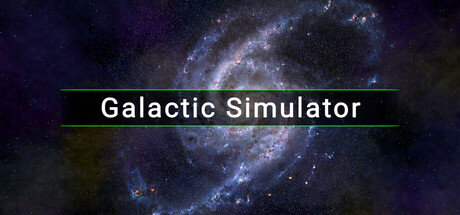
Galactic Simulator is a clicker-based simulation of celestial bodies and civilizations, viewed from an observer's perspective.
It models the components of the Drake equation and stages of the Great Filter, from suitable stellar systems and organic molecules through intelligent life, tribal societies, and civilization. Civilizations develop along the Kardashev Scale, while planets receive distinct appearances and real-world physical data. The galaxy continues evolving without player input, with key click actions, explanations, and auto-completion options. Casual, Realistic, and Sandbox modes change event success rates, data realism, or resource use. Multiplayer, leaderboards, camera controls, and screensaver mode are also included.
How Galactic Simulator plays
- 01Drake Equation Model
- The simulation includes each component used to estimate detectable extraterrestrial civilizations.
- 02Great Filter Stages
- Civilizations can pass through evolutionary stages ranging from habitable planets to a civilizational stage, with failure possible along the way.
- 03Three Game Modes
- Casual uses 50% success rates for most events and filters, Realistic uses more realistic rates and data, and Sandbox removes resource use and generation.
- 04Autonomous Galaxy
- The universe continues developing over time even when no player actions are occurring.
- 05Multiplayer Galaxies
- Players can create a galaxy together with friends.
- 06Planetary Data
- Individual planets have distinct appearances and are fitted with real-world physical data.
- 07Camera Controls
- WASD moves the view, Q and E rotate it, and Z and C adjust the zoom.
- 08Global Leaderboards
- Players can display their unique planets to people worldwide through leaderboard support.
Galactic Simulator compared to similar games
Ages of Conflict: World War Simulator also centers on observing a simulation, but it focuses on customized AI nations, wars, alliances, revolts, and political states. Galactic Simulator instead models planets, biological development, civilizations, the Drake equation, and Great Filter stages, with the galaxy evolving over time.
Galactic Simulator: platforms & release
Is Galactic Simulator worth it?
It is worth it if: players interested in the Fermi Paradox who want a low-input galaxy simulation. Skip it if: players seeking hands-on management, frequent decisions, or complex resource planning.
Where can I download Galactic Simulator?
Use the Download Now button on this page: it opens Galactic Simulator's store page, where you can choose how to get it.
What platforms is Galactic Simulator on?
Windows and macOS.